
In the decades after World War II, commercial aviation entered what many historians call the “Golden Age” of flying, a period that ran roughly from the late 1940s through the 1970s. For travelers who could afford it, flying was not just transportation. It was a status symbol, a social occasion, and a carefully staged experience designed to feel exclusive.
Flying Was Prestigious Because It Was Rare (and Expensive)
Unlike today—when flights can be booked in minutes and prices can be competitive—air travel in this era was priced for the wealthy. Tickets were limited, and the high cost helped create an atmosphere where passengers expected premium treatment at every stage of the journey.
One example often cited from the period: a round-trip ticket from Chicago to Phoenix cost $138 in 1955, which is estimated to be about $1,200 in today’s money. On many routes, flying could cost four to five times more than modern airfare relative to typical incomes, keeping the passenger list largely elite.
The Experience Was Built Around Luxury, Not Efficiency
What most surprises modern travelers is how airlines competed on glamour and comfort—especially space and service—rather than on volume and speed-of-turnaround.
A typical Golden Age flight commonly included:
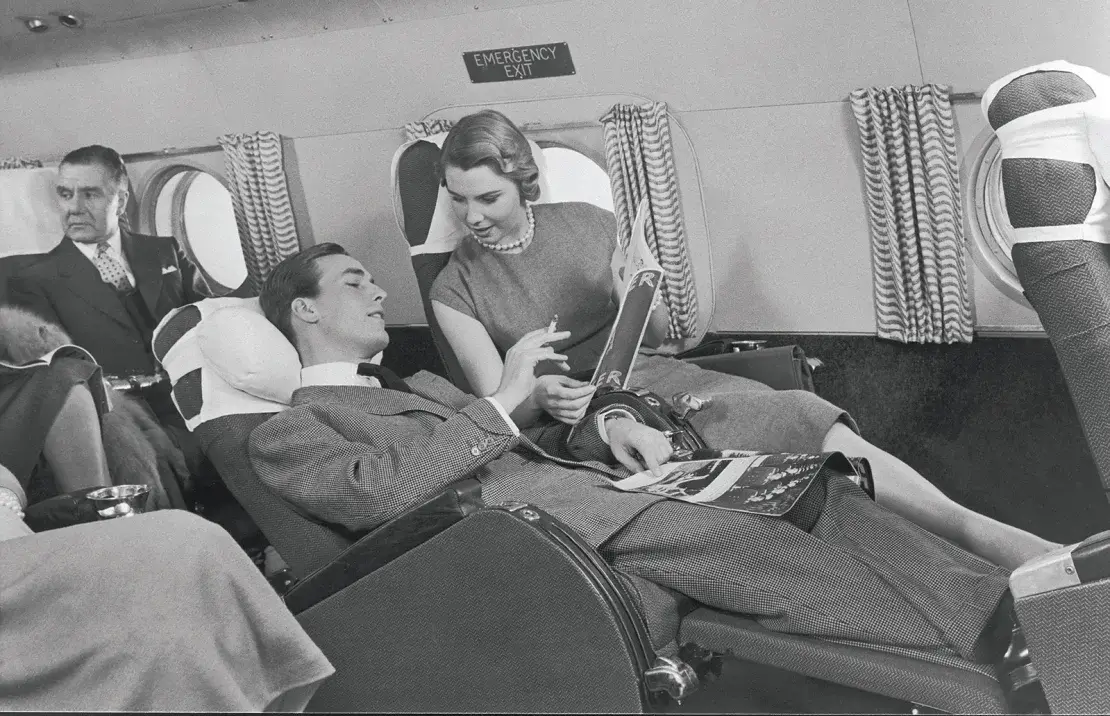
- Spacious seating and noticeably more legroom
- Seat pitch was often about 36–40 inches, compared with around 28 inches on many aircraft today.
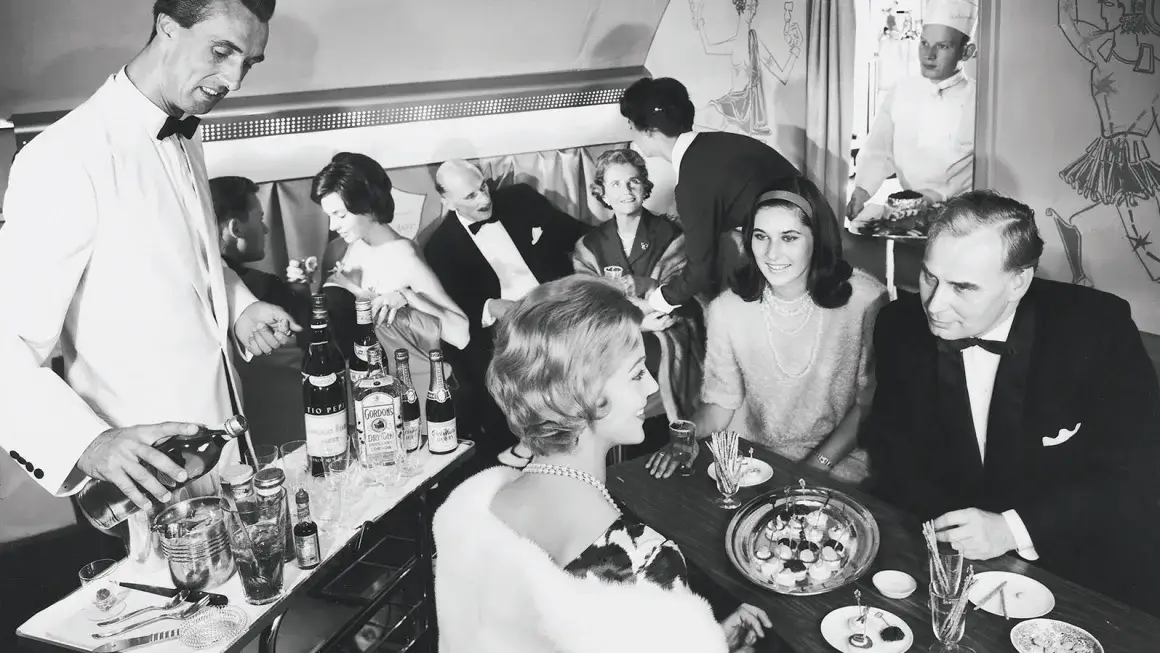
- Cocktail lounges on certain long-haul aircraft, turning flights into social events.
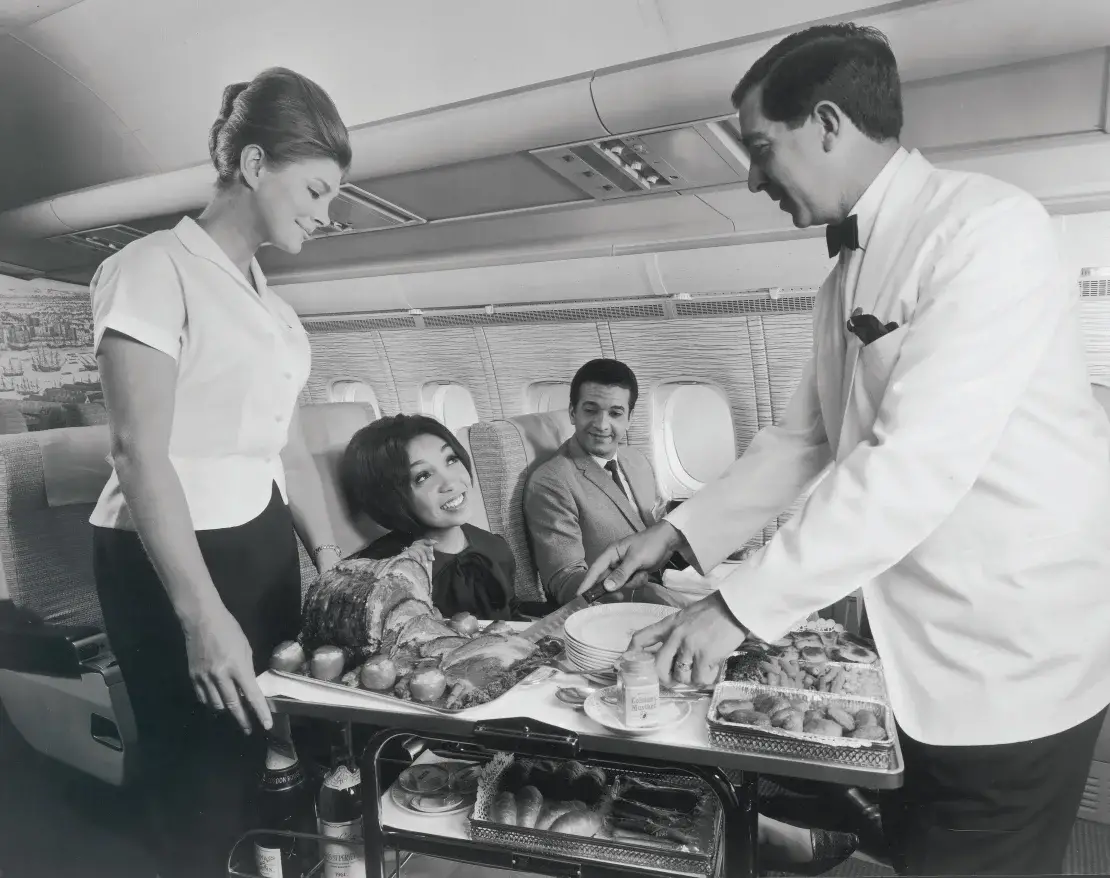
- Multi-course meals served as part of the ticket price
- In many cases: five-course dining, plated service, and premium presentation.
- An “open-flow” bar culture
- Champagne and cocktails were treated as part of the onboard experience, not an add-on.
In other words, the cabin was designed to feel closer to a high-end restaurant or private club than a modern high-density transport system.
What the Food and Service Looked Like
Airlines marketed their flights as luxurious travel, and crews were trained to deliver an experience that matched that promise.
Reported examples of typical service included:
- Canapés at the start of service
- An appetizer cart featuring items such as beluga caviar and foie gras
- Carefully staged meal pacing—more like formal dining than “tray-and-go”
- Cabin routines that encouraged socializing and relaxed conversation
For many passengers, the standout memory was not only what was served, but how it was served—formality, presentation, and an attitude that treated travelers as guests rather than customers moving through a system.
A Different Airport and Security Environment
Another defining feature of the era was the overall sense of freedom. Airports and boarding procedures were less restrictive than today’s standards, which contributed to a more relaxed, celebratory tone around travel.
That atmosphere often showed up in:
- A feeling that flying was an “occasion,” not an inconvenience
- Passengers treating the terminal and cabin like a social venue
- Expectations of politeness and appearance as part of the travel culture
Dress Codes Were Real, and They Mattered
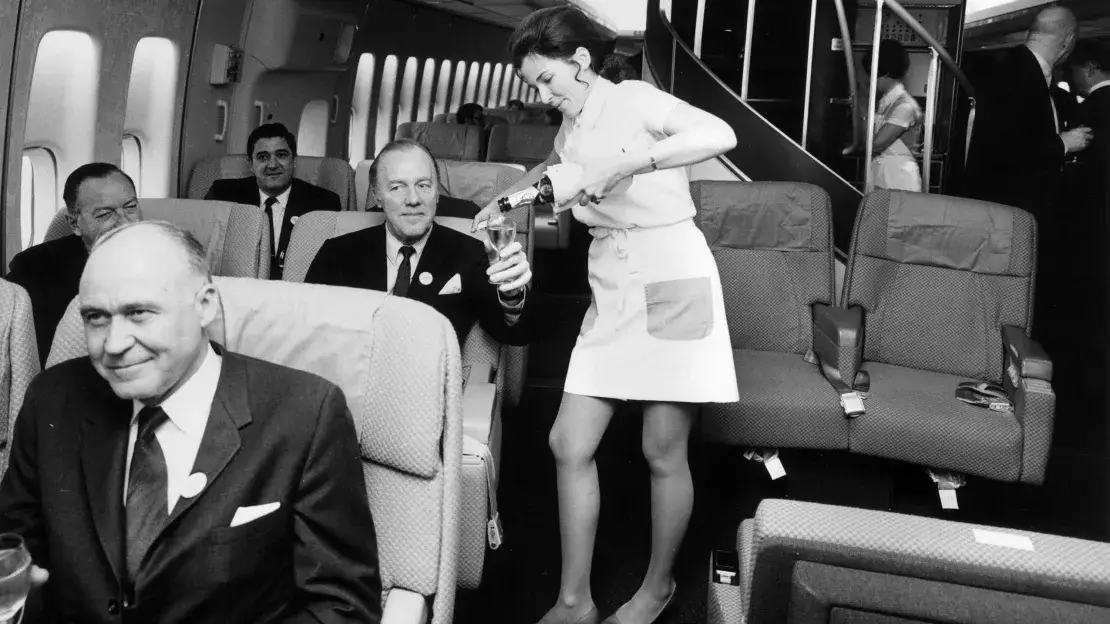
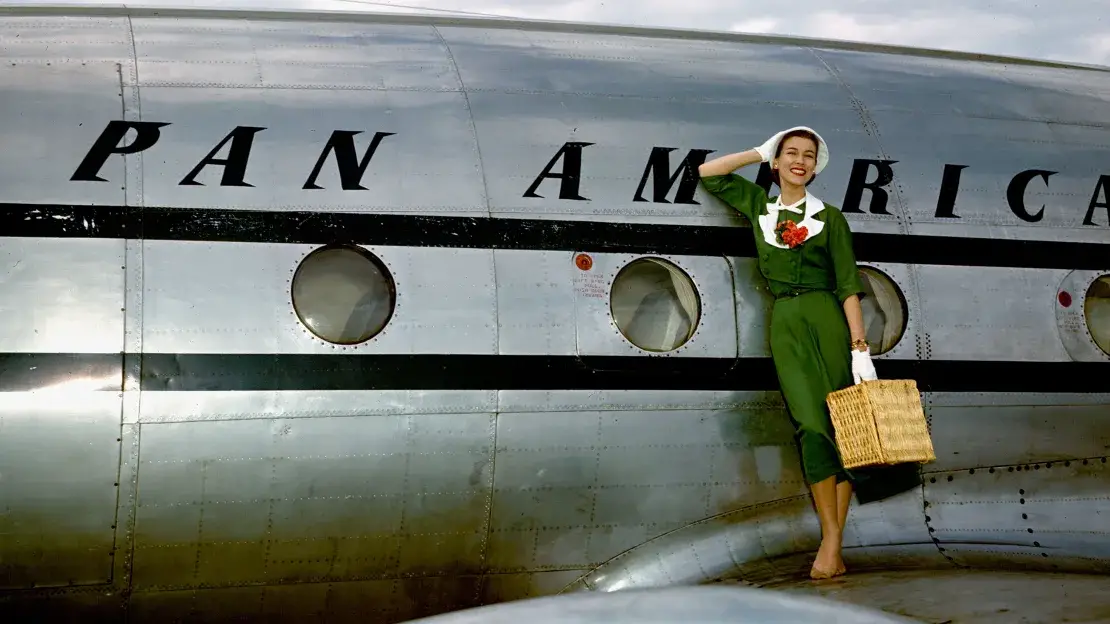
During this period, many travelers dressed as if they were attending an upscale event. Wearing a jacket, tie, or formal outfit was common—not because it was required everywhere, but because flying carried social prestige.
Cabin crew presentation was even more strictly controlled. Flight attendants were expected to be polished and uniform, and airlines imposed rules that reached well beyond the job description.
Common expectations included:
- Strict standards on attire and grooming
- Requirements related to hair length and weight
- In some cases, rules affecting marital status
- By the 1960s, uniforms became more revealing, reflecting broader cultural trends and a heightened focus on image
The Iconic Airlines and the “Celebrity” Feel
Certain carriers became symbols of the era’s glamour, with reputations that made flying feel like a brush with fame. For employees, joining one of these flagship airlines could feel like stepping into a world of travel, exclusivity, and adventure.
The Trade-Off: Comfort and Glamour, but Lower Safety Standards
While the Golden Age is remembered for luxury, it came with a major caveat: aviation safety was not as advanced as it is today. Technology, regulations, and industry-wide safety systems have improved dramatically since that era.
That contrast helps explain why the period feels so unusual in hindsight:
- The “guest experience” was often exceptional
- The broader safety environment was still developing
- Modern flying shifted toward scale, affordability, and standardized procedures
Why It Still Fascinates People Today
The Golden Age remains compelling because it represents a version of air travel that prioritized:
- Exclusivity over accessibility
- Space and service over density
- Ritual and presentation over speed and throughput
For most travelers today, that world is gone—but its influence persists in premium cabins, airline branding, and the ongoing nostalgia for a time when flying felt like an event rather than an errand.
