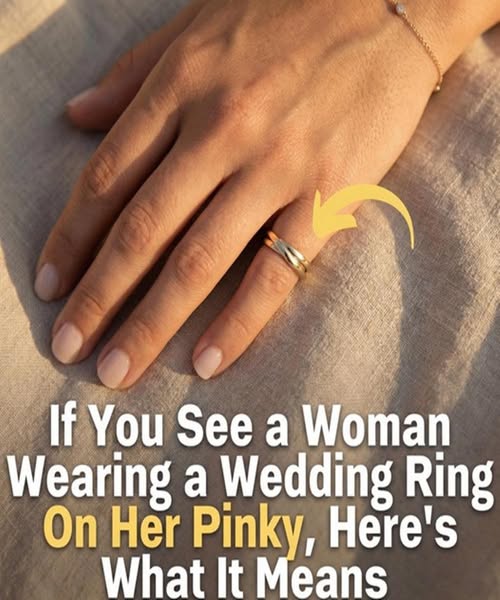
For centuries, rings have served as powerful symbols, communicating meaning without the need for words. Across cultures and historical periods, they have marked commitment.
Authority, belonging, wealth, and transition. Among these meanings, the ring finger has held a particularly dominant role, closely associated with marriage, engagement, and romantic partnership.
This association has shaped not only social customs but also expectations about identity, especially for women. Against this long-standing backdrop, the growing choice of women to wear rings on their pinky fingers represents a subtle yet meaningful cultural shift.
What may appear at first glance to be a simple fashion decision often carries deeper implications related to autonomy, self-recognition, and fulfillment beyond relationship status.
Unlike engagement or wedding rings, the pinky ring exists independently of traditional romantic symbolism. It does not compete with or replace rings associated with marriage.
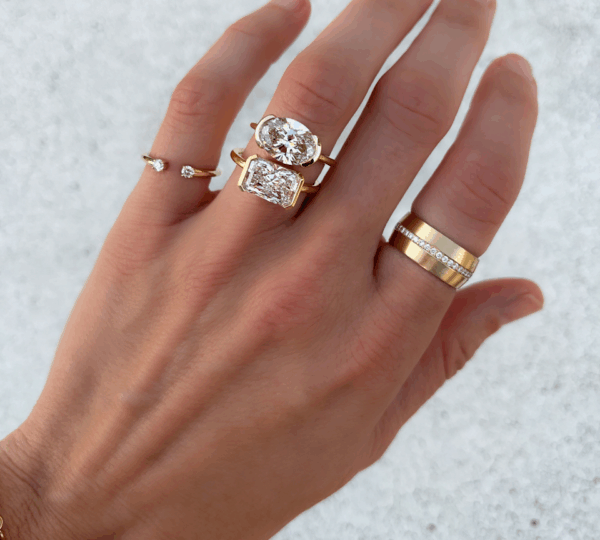
Instead, it occupies a separate symbolic space—one that allows for personal meaning without societal prescription. Its placement challenges the assumption that a woman’s value, maturity, or success must be publicly validated through partnership.
Rather than signaling union with another person, the pinky ring increasingly symbolizes a commitment to oneself, reflecting a growing cultural recognition that identity and wholeness do not depend solely on romantic relationships.
Historical Context of Rings and Symbolism
Rings have been worn since ancient times, with archaeological evidence tracing their use back to early civilizations in Egypt, Mesopotamia, Greece, and Rome. Historically, rings often represented power, contracts, lineage, or allegiance.
Signet rings, for example, were used by rulers and officials to seal documents, serving as both personal identifiers and instruments of authority. In many societies, the act of wearing a ring conveyed status or responsibility rather than romance.
The strong association between the ring finger and marriage developed gradually. In Western tradition, it is often linked to the ancient belief in the vena amoris, a vein thought to connect the ring finger directly to the heart.
While modern anatomy does not support this idea, the symbolism endured and became culturally entrenched. Over time, this association narrowed the perceived meaning of rings, especially for women, making the ring finger a public indicator of marital status.
The pinky finger, by contrast, remained relatively free from rigid expectations. Historically, pinky rings were worn by men to signify rank, wealth, or independence, particularly in European aristocracy.
In the 19th and early 20th centuries, pinky rings were often associated with nonconformity or quiet authority. Because the pinky finger was not burdened with romantic symbolism, it retained a sense of individuality and personal expression.
The Pinky Finger as a Symbolic Space
In both historical symbolism and modern interpretations, the pinky finger has been linked to communication, intellect, and intuition.
In some philosophical and cultural traditions, it is associated with self-expression and the ability to articulate one’s inner world. While these interpretations are not scientific, they have influenced how people perceive the pinky finger as a site of individuality rather than obligation.
For many women today, this symbolic openness makes the pinky finger an appealing place for a ring with personal meaning.

It allows the wearer to define the symbolism for herself rather than inheriting it from tradition. The ring becomes a personal marker rather than a social announcement.
This choice aligns with broader social changes. As women increasingly pursue education, careers, financial independence, and personal growth on their own terms, traditional milestones such as marriage are no longer the sole indicators of adulthood or success.
The pinky ring, in this context, functions as a visual expression of self-definition rather than conformity.
Psychological Meaning and Personal Milestones
Psychologically, objects can serve as anchors for intention and identity. Rings, in particular, symbolize commitment because of their circular shape, which has long represented continuity and permanence.
When a woman chooses to wear a ring that is not tied to another person, the commitment symbolized by the ring is directed inward.
Many women associate their pinky ring with a personal turning point. This might include the end of a significant relationship, recovery from emotional or physical hardship, achieving financial stability, or reaching a level of self-acceptance after a long period of struggle.
These milestones are often deeply transformative, yet they are rarely acknowledged or celebrated by society in the same way that weddings or engagements are.
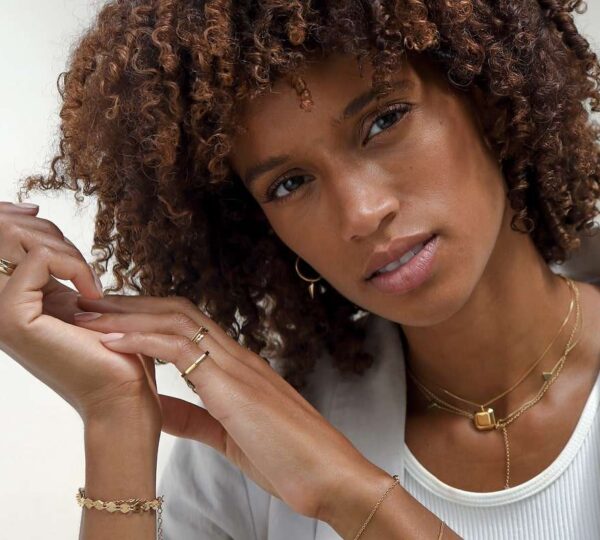
In this sense, the pinky ring becomes a quiet but meaningful affirmation. It may serve as a reminder of resilience, growth, or promises made to oneself.
Unlike externally imposed symbols, this internal commitment is freely chosen, which often gives it greater emotional strength. The ring does not demand explanation, nor does it require validation from others. Its meaning can remain private, known only to the wearer.
Independence Without Rejection of Love
It is important to note that the symbolism of the pinky ring does not inherently reject love, marriage, or tradition. Many women who wear pinky rings are happily partnered or married.
Others may value romantic relationships while also prioritizing personal autonomy. The pinky ring does not oppose commitment; instead, it expands the definition of what commitment can mean.
This distinction is crucial. The cultural shift represented by the pinky ring is not about rejecting relationships, but about challenging the idea that relationships must define identity.
It reflects a more balanced understanding of selfhood, where personal fulfillment and connection with others coexist rather than compete.
Fashion History and Cultural Reinterpretation
From a fashion perspective, the pinky ring has long carried an edge of distinction. In various eras, it has been associated with power, rebellion, or refined individuality.
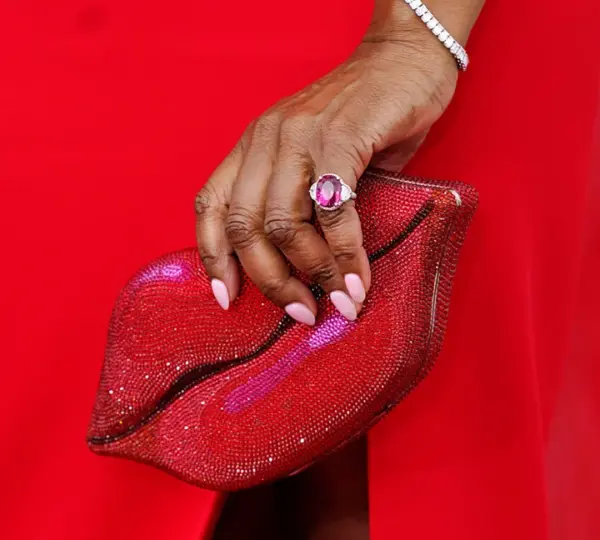
In the late 20th century, pinky rings sometimes appeared in subcultures as symbols of resistance to convention. Today, women are redefining this legacy, transforming the pinky ring into a symbol of self-sovereignty rather than defiance.
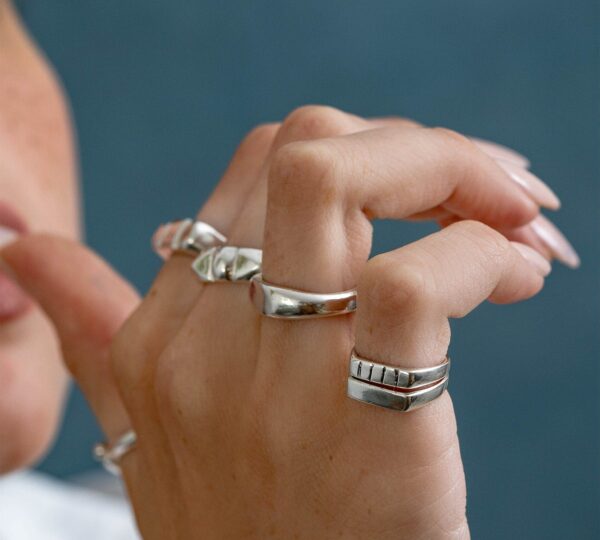
Modern designs range widely in style, material, and significance. Some women choose minimal bands, emphasizing simplicity and intention. Others prefer bold or sculptural designs that assert presence.
Inherited or vintage pinky rings may carry family history, blending personal identity with generational continuity. There is no single aesthetic standard, because the meaning itself is personal and unregulated.
This flexibility reflects contemporary values. Fashion is increasingly seen as a form of self-expression rather than adherence to prescribed norms.
The pinky ring fits naturally into this shift, allowing women to communicate individuality without making overt statements.
A Reflection of Broader Cultural Change
The rising visibility of pinky rings worn by women mirrors larger societal changes regarding gender roles, autonomy, and self-worth.
As traditional timelines and expectations evolve, women are increasingly empowered to define success and fulfillment on their own terms. Symbols, even small ones, adapt alongside these changes.
The pinky ring’s understated presence is part of its strength. It does not seek attention, yet it carries meaning. It represents a quiet confidence—a recognition that growth, independence, and self-authorship deserve acknowledgment, even if they are not publicly celebrated.
In a world that has long prioritized external validation, the symbolism of the pinky ring offers an alternative narrative. It honors internal milestones and personal values.
Small and often unnoticed, it reflects a cultural movement toward valuing autonomy, emotional maturity, and self-defined identity.
Conclusion
Ultimately, the pinky ring is not about a single message or ideology. Its significance lies in its openness. Free from rigid tradition, it allows women to assign meaning based on their own experiences and values.
Whether it represents independence, recovery, self-respect, or simply personal style, the pinky ring stands as a symbol of choice.
By wearing a ring on the pinky finger, women are not rewriting history so much as expanding it. They are adding new layers of meaning to an ancient symbol, aligning it with contemporary understandings of identity and fulfillment.
In doing so, they quietly affirm a powerful idea: that worth, commitment, and meaning can come from within, and that self-authorship is a milestone worthy of recognition.
