In 2016, deep beneath the surface of Canada, scientists encountered something that felt closer to science fiction than geology. Nearly three kilometers underground, water began bubbling out of ancient rock fractures. At first glance, it looked clear and deceptively ordinary. But laboratory analysis soon revealed a staggering truth. This water had been isolated from the surface for up to 2.6 billion years, making it the oldest known water ever discovered on Earth.
What transformed this already astonishing discovery into a viral moment was not just its age or its implications for life on other planets. It was a simple, very human act. One of the scientists leading the research dipped her finger into the ancient water and tasted it. The result was unexpected, unforgettable, and deeply revealing.
This is the story of how geologists uncovered Earth’s oldest water, why tasting it was not as reckless as it sounds, and how the discovery is reshaping our understanding of life, time, and what may exist beneath our feet and beyond our planet.
The Moment Scientists Realized They Had Found Something Extraordinary
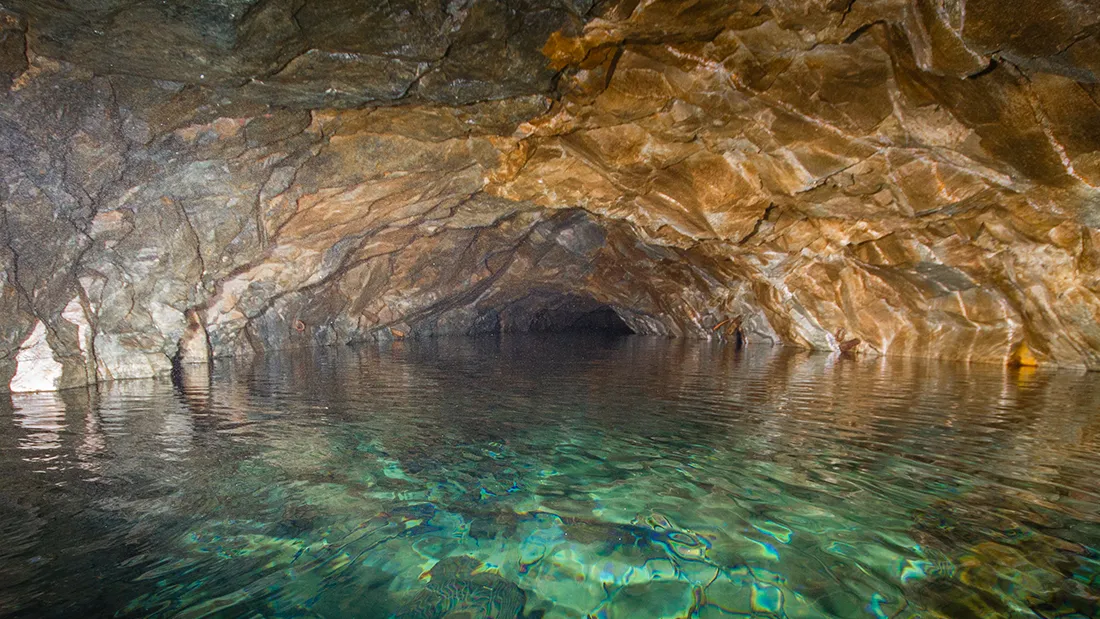
The discovery took place inside the Kidd Creek Mine near Timmins, Ontario, one of the deepest base metal mines in the world. While the mine itself is a modern industrial site, the water emerging from its fractures was anything but modern. Researchers noticed that the water was not stagnant or trapped in tiny pockets. It was flowing steadily, bubbling out of the rock at rates of liters per minute.
The team, led by of the University of Toronto, immediately suspected they were dealing with something unusual. Previous assumptions about ancient groundwater often imagined microscopic amounts locked inside minerals. What they saw instead was a substantial, active system that had been sealed away since before complex life existed on Earth.
Initial measurements hinted at extreme salinity, a classic signal of very old water. The deeper the water circulates and the longer it remains underground, the more minerals it dissolves from surrounding rock. But no one expected the numbers that followed.
How Scientists Determined the Water Was Billions of Years Old

Dating water is far more complex than dating rocks. You cannot simply measure age directly. Instead, scientists rely on chemical fingerprints that accumulate over immense spans of time. In this case, the team analyzed noble gases such as helium, as well as isotopes of hydrogen and oxygen trapped within the water molecules themselves.
These elements act like a geological clock. Radioactive decay in surrounding rocks slowly releases gases into groundwater. The longer the water remains isolated, the more these gases build up. When the results came back, they pointed to an age range between 1.5 and 2.6 billion years.
To put that into perspective, this water likely formed before multicellular life existed, before plants colonized land, and possibly before Earth’s atmosphere contained much oxygen at all. It is a liquid time capsule from a world that no longer exists.
The findings were later published in the journal drawing immediate attention from geologists, astrobiologists, and the wider scientific community.
Evidence That Life Once Thrived in Total Darkness
Perhaps the most profound discovery was not just the water’s age, but what it contained. Chemical analysis revealed sulfate signatures that bore the unmistakable imprint of biological activity. These were not traces carried down from the surface. They were produced in place.
According to Sherwood Lollar, the sulfate showed patterns that could only be created by microbes operating over geological timescales. This meant that life had not merely passed through these waters. It had persisted there for millions or even billions of years.
The microbes survived without sunlight, relying instead on chemical energy generated when radiation from surrounding rocks split water molecules into hydrogen and other compounds. This process, known as radiolysis, creates a self-sustaining energy source that can operate indefinitely as long as water and rock remain in contact.
This discovery expanded the known boundaries of life on Earth. It demonstrated that ecosystems can exist entirely cut off from the surface, powered by geology rather than the sun.
Why Tasting Ancient Water Was Not a Reckless Stunt
The detail that captured the public’s imagination was simple. Barbara Sherwood Lollar tasted the water.
To many, this sounded shocking or even dangerous. But within geology, it was neither unusual nor impulsive. Field geologists routinely use their senses when working in dark, complex environments. Taste can provide immediate clues about salinity, which in turn offers insight into a water’s potential age.
Sherwood Lollar did not drink the water. She dipped the tip of her finger and briefly touched it to her tongue. The result was exactly what she expected but still striking. The water was intensely salty and bitter, far saltier than seawater.
That flavor confirmed what instruments would later prove. The water had been interacting with rock for an unfathomably long time, concentrating minerals to extreme levels. While the water looked crystal clear, it was absolutely not potable.
As she later explained, the sample was far too scientifically valuable to waste. The taste test was a quick field observation, not an act of curiosity gone wild.
A Hidden World Beneath the Planet’s Surface
The conditions inside the mine were anything but serene. Researchers described the environment as dark, dusty, noisy, and intensely hot. Water emerged from fractures in the rock or from boreholes drilled to intersect them. These flows had existed long before the mine itself.
Miners in Canada, Finland, and South Africa had known about deep, salty waters for well over a century. Mining records from the 1800s even mention them. What had been missing was scientific attention and modern analytical tools.
The mine acted like a window into Earth’s deep crust, much like a submarine allows access to the deep ocean. Without mining infrastructure, reaching such depths would be nearly impossible.
What This Discovery Means for Life Beyond Earth
One of the most exciting implications of the ancient water lies far beyond Canada. If life can survive underground on Earth for billions of years without sunlight, similar environments could exist elsewhere in the solar system.
Mars, for example, once had surface water but lost it as its atmosphere thinned. Scientists now suspect that pockets of subsurface water may still exist deep below the Martian crust. If microbial life ever arose there, this research suggests it could have retreated underground and survived long after the surface became hostile.
Icy moons such as Europa and Enceladus also feature interactions between rock and water beneath their frozen shells. Chemical energy, not sunlight, may power any life that exists there.
Chris Ballentine, a geochemist involved in the study, has pointed out that Earth’s deep waters serve as analogues for these extraterrestrial environments. They show that life does not require ideal conditions. It requires stability, energy, and time.
Rethinking What We Mean by Habitable
For decades, scientists defined habitable zones primarily by distance from a star. Liquid water on the surface was the gold standard. Discoveries like this force a redefinition.
Habitability may be far more common than previously thought, hidden beneath surfaces and sustained by chemical reactions rather than sunlight. Earth’s deep biosphere could rival surface ecosystems in size and diversity.
This realization has implications not only for space exploration but for understanding Earth itself. Vast ecosystems may exist beneath our feet, largely unexplored and barely understood.
Why the Internet Could Not Look Away
There is something deeply compelling about the idea of tasting something older than complex life. The story combined cosmic timescales with an intimate human moment. It made deep science accessible, tangible, and slightly unsettling.
The phrase “forbidden water” circulated online, capturing the sense that this liquid was not meant for human consumption. Yet it also sparked curiosity about what else the Earth is hiding in plain sight.
In a world saturated with fast-moving news, this story slowed people down. It invited reflection on time, resilience, and the strangeness of our planet.
The Next Frontier in Ancient Water Research
Researchers are now searching for similar waters around the globe. By comparing their chemistry and biological signatures, scientists hope to map Earth’s deep ecosystems and understand how life adapts to extreme isolation.
The work is painstaking. Detecting microbial life in such environments requires meticulous analysis and patience. But each new sample adds another piece to a puzzle billions of years in the making.
As Sherwood Lollar has emphasized, these waters are not relics. They are active systems, still flowing, still reacting, and possibly still supporting life.
A Humbling Reminder From Beneath Our Feet
The discovery of 2.6 billion-year-old water is more than a scientific milestone. It is a reminder of how little we truly know about our own planet. Beneath familiar landscapes lie environments that predate animals, plants, and even oxygen-rich air.
That a human being could touch, taste, and study something so ancient collapses the distance between deep time and everyday experience. It challenges us to think beyond surface appearances and reconsider where life can exist.
In the end, the story is not really about tasting ancient water. It is about curiosity, patience, and the quiet persistence of life in places we once believed were utterly lifeless. The Earth, it turns out, still has many secrets left to share.
