
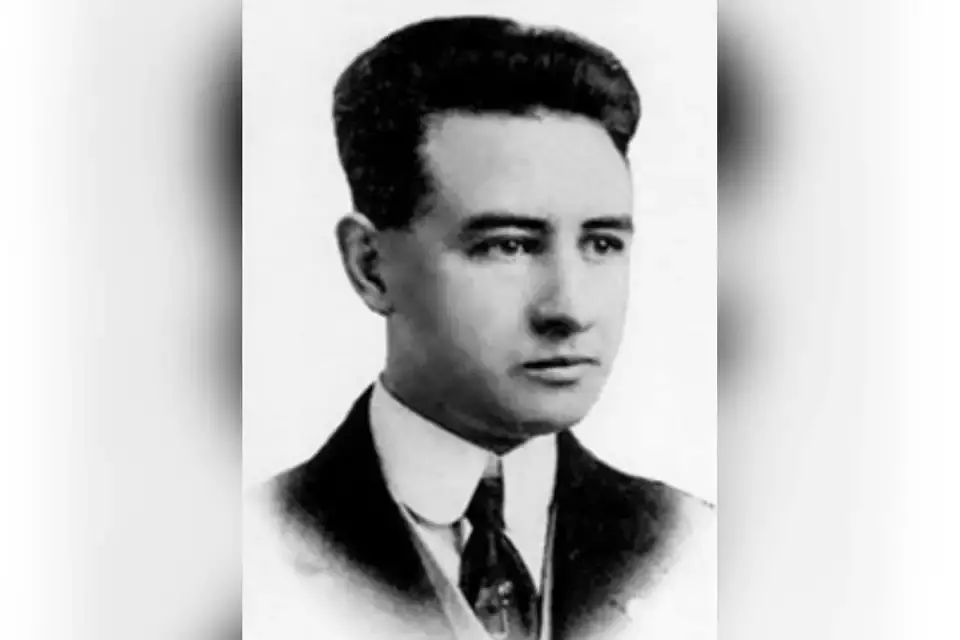
Dr. James Hiram Bedford was a university professor and a World War I veteran who lived an active, well-traveled life. Yet his name is most closely tied to a single historic first: he became the first person to undergo cryonic preservation after death, a procedure intended to keep the body (or brain) at extremely low temperatures in the hope that future medicine might one day reverse the damage that caused death.
What Cryonic Preservation Is
Cryonics is often described as an experimental “time capsule” approach to death care. The central idea is simple in theory, but unproven in practice:
- The body is cooled to extremely low temperatures soon after legal death
- Special chemicals are used to reduce ice-related damage
- The body is stored long-term in liquid nitrogen at about −196°C
- The hope is that future technology could repair disease, reverse cellular damage, and potentially restore life
It is important to note that no human has ever been revived from cryonic preservation using current medical capabilities.
Bedford’s Diagnosis and Decision
In 1967, Bedford was diagnosed with kidney cancer that had metastasized to his lungs, at a time when cancer treatment options were far more limited than they are today.
By then, Bedford was already aware of cryonics. He had read about the concept in The Prospect of Immortality by Dr. Robert Ettinger, a prominent figure in early cryonics advocacy. Ettinger is widely known for helping popularize the idea that cryonic preservation could, someday, allow medicine to “resume” a life that could not be saved in its own era.
After learning about the process, Bedford made a clear request: he wanted his body to be frozen after his death.
The Cryonics Procedure in 1967
On the afternoon of January 12, 1967, Bedford’s preservation took place using methods that were early and far less refined than modern cryonics protocols.
Key steps described in accounts of the procedure include:
- Administration of dimethyl sulfoxide (DMSO), intended as a protective agent for internal tissues
- Replacement of normal circulating fluids as part of preparation for deep cooling
- Placement into liquid nitrogen at approximately −196°C for long-term storage
The Alcor Inspection, 24 Years Later
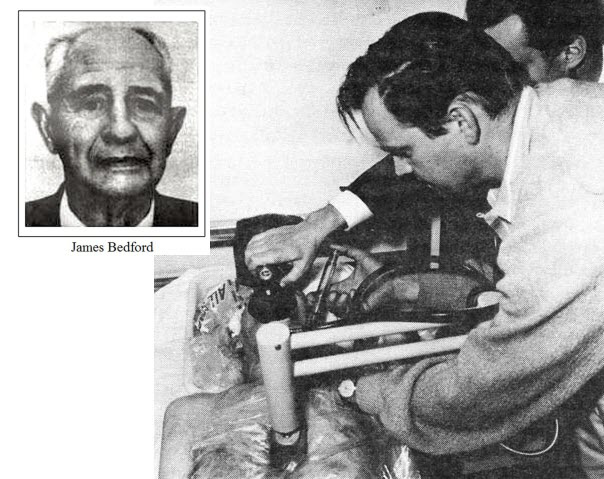
Roughly 24 years after the original preservation, the organization Alcor reportedly opened Bedford’s storage unit to assess his condition.
The assessment described several notable observations:
- The body appeared to be preserved relatively well for such an early cryonics case
- His face reportedly looked younger than his age at death (73)
- Some areas of skin (especially the chest and neck) showed discoloration
- The eyes were described as having ice-related opacity
After the inspection, technicians rewrapped Bedford and returned him to long-term storage in liquid nitrogen.
What Happened After the “Promise” of Revival?
More than 50 years later, Bedford remains in cryonic storage. Despite hopes attached to cryonics, the reality today is that cryonic preservation has not yet led to revival, and there is no verified method to restore a preserved human being to life.
In other words, Bedford’s body remains preserved—but not awakened.
Bedford’s Motivation, in His Own Words
One of the most striking parts of Bedford’s story is the intention he reportedly expressed near the end of his life. According to Robert Nelson, one of the individuals involved in the preservation, Bedford’s last words emphasized that he was not chasing personal immortality, but a future benefit for others:
- He did not expect to be revived
- He chose cryonics so that future generations—his descendants—might benefit from scientific progress
Why Bedford’s Story Still Matters
Bedford’s preservation remains a landmark because it highlights the intersection of:
- medical limitation in one era
- faith in scientific progress
- the human desire to leave a meaningful legacy
Whether cryonics ever becomes more than a speculative experiment, Bedford’s case continues to symbolize a bold, controversial question: what if death could someday be treated as a problem technology can solve?
