

What It Is Called
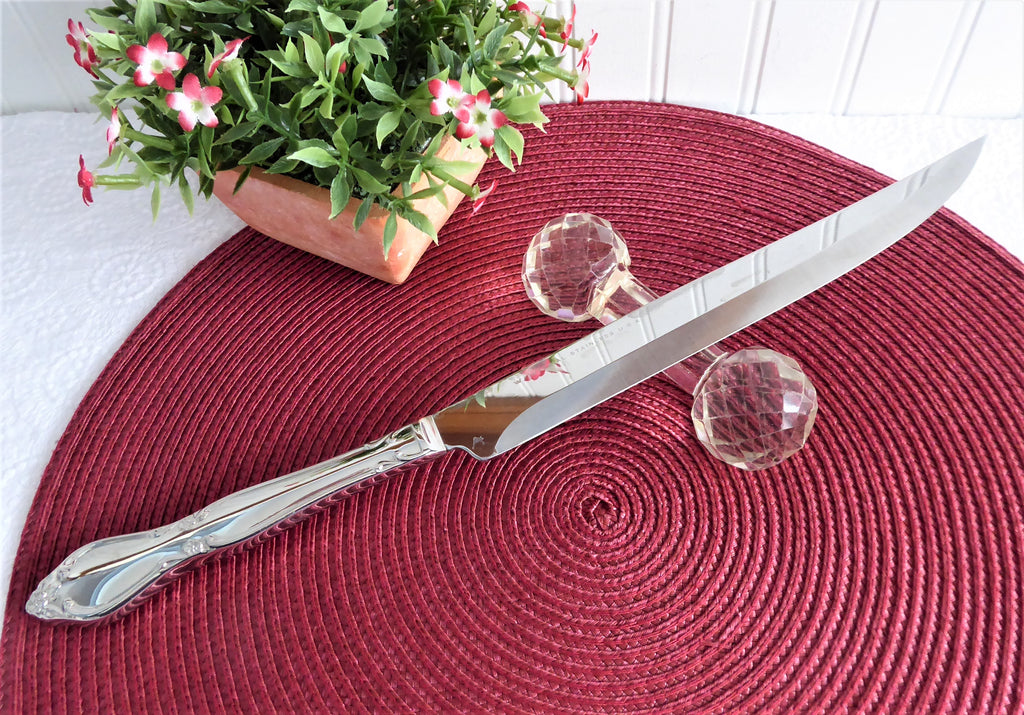
- Primary name: Vintage Crystal Prism Knife Rest
- Also known as: Carving Knife Rest, Knife Rest, Cutlery Holder, Table Knife Stand
- Common description: A barbell-shaped cut-crystal rest with a hexagonal central bar and faceted ball ends
When It Was Made
- Era: Mid-Victorian period
- Approximate date range: 1850s–1870s
- Place of origin: England
Who Made It
- The specific maker is not identified in the provided information.
- Items like this were typically produced by English cut-glass artisans and workshops serving Victorian formal dining and entertaining.
Key Features and Measurements
- Material: Hand-cut, hand-faceted crystal
- Shape:Barbell form
- Center: Hexagonal prism bar
- Ends: Faceted lapidary-style crystal balls
- Size: 1.5 inches high × 4.75 inches long
- Visual effect: Faceting creates prismatic reflections that sparkle under candlelight or bright dining-room lighting.
What It Was Used For
A knife rest was designed to keep serving utensils elevated between uses during a meal, especially at formal Victorian tables.
Primary functions
- Keeps the carving or master knife blade off the table to maintain cleanliness and hygiene
- Helps protect table linens from grease, sauces, and stains
- Prevents a heavy serving knife from rolling or touching place settings
- Adds decorative elegance to the table as part of refined dining presentation
How It Would Have Been Used at the Table
- Placed near the carving area or serving platter.
- The knife is set across the rest so the blade and handle stay raised above the tablecloth.
- Often paired with other formal table items such as serving forks, gravy ladles, and condiment stands.
Why This Piece Matters
- Represents the Victorian focus on etiquette, cleanliness, and elaborate table settings
- Demonstrates the period’s appreciation for cut crystal craftsmanship
- Serves as both a functional object and a decorative accent—especially suitable for holiday table décor and formal entertaining
Care and Handling Tips (For Preservation)
- Handle by the central bar to reduce smudges on faceted ends.
- Clean gently with mild soap and warm water, then dry with a soft, lint-free cloth.
- Avoid abrasive cleaners to protect the sharp, crisp facets.
